

As metal roofing continues to gain traction in the commercial space, it is increasingly being viewed as a legitimate alternative to traditional flat and low-slope roofing systems. One approach in particular is accelerating that shift: retrofitting existing commercial roofs with metal rather than tearing them off and starting from scratch.
For contractors, this strategy represents more than just another installation method. It’s a way to unlock larger projects, stronger margins, and a more scalable path into the commercial metal roofing space.
What Does a Metal Roof Retrofit Mean?
When a commercial roof reaches the end of its useful life, building owners typically assume they have only one option: tear off the existing roof and replace it entirely. A metal roof retrofit offers a different path.
Instead of removing the old roof, a new metal roof system is installed directly over the existing structure, often with minimal or no tear-off required. The original roof remains in place while the new metal system provides long-term protection, durability, and performance.
Why Building Owners Choose to Retrofit
The primary drivers behind retrofit decisions are cost, time, and operational continuity.
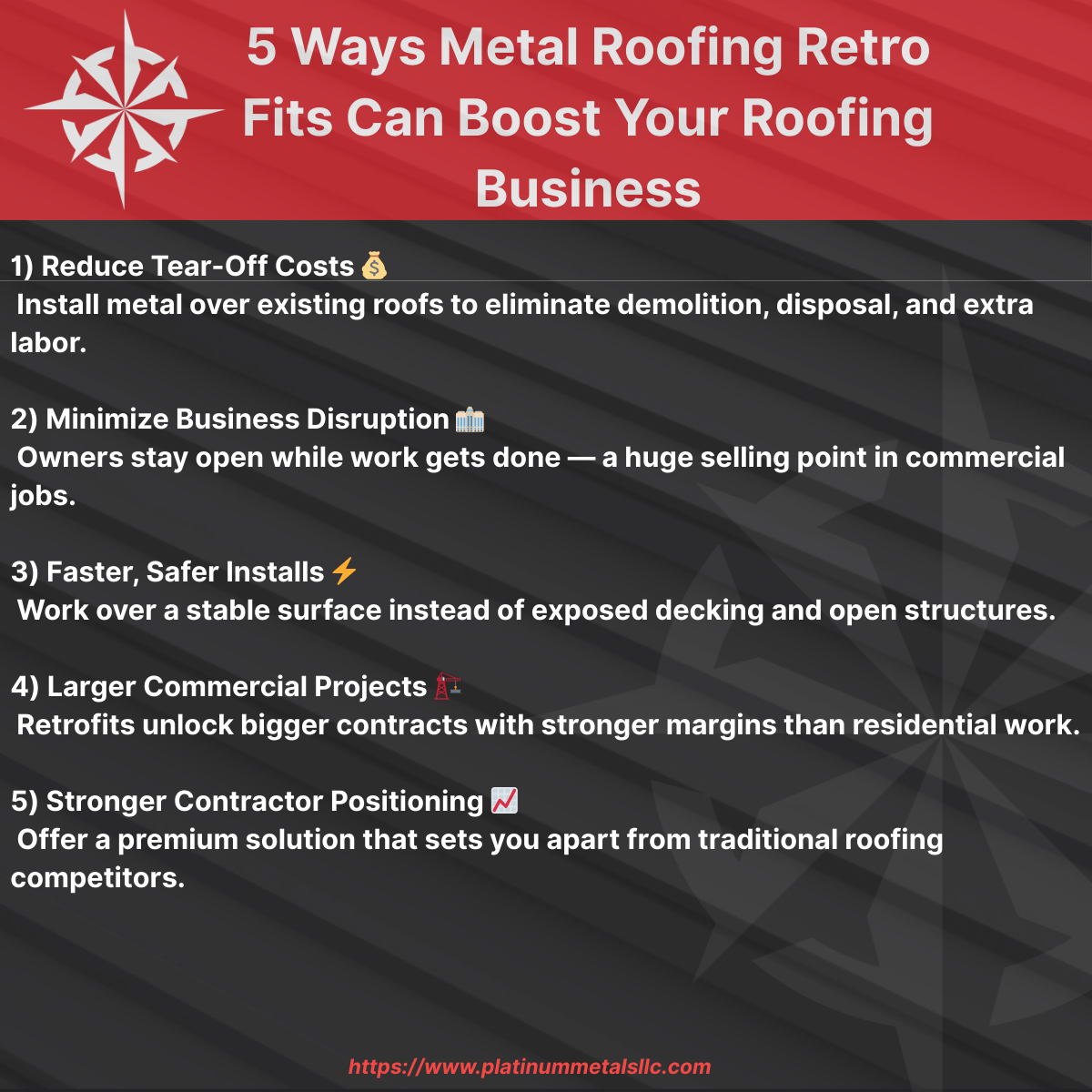
A full tear-off is expensive. It requires dumpsters, landfill fees, additional labor, and longer job timelines. In many cases, it can also force a business to slow down or temporarily shut down operations — an outcome most commercial owners want to avoid.
Retrofits largely eliminate these issues. By keeping the existing roof in place, businesses can continue operating throughout the project. There’s less disruption, fewer moving parts, and a faster overall timeline.
The Hidden Cost of Code Compliance
When a roof is fully removed, the replacement typically must meet current building codes — especially around insulation, safety, and energy requirements. These updates can trigger unexpected design changes, additional permitting, inspections, and higher overall costs.
Because metal retrofits do not involve full tear-off, they can often avoid these cascading requirements, resulting in fewer surprises and a smoother approval process.
Faster, Safer, and More Efficient Jobs
Metal roof retrofits create a safer working environment. Crews install over a solid existing surface rather than exposed decking or unstable footing, reducing risk and improving efficiency.
The lack of tear-off also reduces cleanup labor and debris removal, which is increasingly important in tight labor markets.
Why This Matters for Contractors
Retrofit projects offer:
- Larger contract sizes
- Stronger margins
- Fewer simultaneous jobs to manage
- Reduced disruption compared to full re-roofing
- Increased credibility with commercial clients
One successful retrofit can often deliver more impact than multiple smaller residential jobs.
Building a Competitive Edge with Metal
While commercial metal roofing has a learning curve, once mastered, retrofits are often easier to manage than full tear-off projects. Their predictable timelines and long-term performance make them an attractive growth strategy.
How Platinum Supports Contractors
At Platinum, we work alongside contractors to help them understand where metal fits strategically, how to position it to customers, and how to select the right products for each job.
Metal roof retrofits aren’t just a technical solution — they’re a business opportunity.
Share This Post!
More Blog Posts